Zinc vs Aluminum Die Casting: Which One Actually Fits Your Project?
_1773302935_WNo_1600d900.webp)
In modern manufacturing, the discussion around zinc vs aluminum die casting has become increasingly important as companies push for better performance, lower cost, and faster production cycles. Both materials dominate the die casting industry, but they excel in different areas depending on part size, structural demands, surface finish, and production volume.
The short answer is that neither material is universally better. Aluminum die casting is generally preferred for larger, lightweight, and thermally demanding components, while zinc die casting is often the better choice for smaller parts that require tight tolerances and complex geometries. As industries such as electric vehicles, telecom infrastructure, and LED lighting continue to expand, manufacturers are paying closer attention to which material delivers the best balance of performance and cost for their specific applications. This guide is particularly useful for:
- Product engineers selecting materials for new component designs
- Procurement managers comparing manufacturing costs and suppliers
- Hardware startups developing custom die casting parts
- Manufacturers evaluating production options in global supply chains
This article breaks down the key differences between zinc and aluminum die casting, including strength, weight, cost, and industry applications, so you can make a more informed material decision for your project. If you are planning a new product or evaluating production options, keep reading to understand which die casting material actually fits your requirements.
Table of Contents
- Why the Right Die Casting Material Changes Everything
- What Is Die Cast Aluminum?
- What Is Zinc Die Casting?
- Die Cast Zinc vs Aluminum
- Cost Breakdown
- Industry Applications: Where Each Material Earns Its Place
- How to Choose Between Cast Zinc and Cast Aluminum?
- Frequently Asked Questions
- Conclusion
Why the Right Die Casting Material Changes Everything
Before comparing cast zinc vs cast aluminum, it's important to understand why material selection is one of the most critical decisions in die casting manufacturing.
Every product starts with a decision that most people never see — what material should this part be made from? In the world of die casting, that question almost always comes down to two metals: zinc and aluminum. Both are widely used, both are proven, and both are capable of producing complex, high-precision parts at scale. But they are not interchangeable, and choosing the wrong one can lead to problems that only appear later in production — failed tooling, missed tolerances, inflated unit costs, or parts that simply don’t hold up in real-world applications.
This guide breaks down the real differences between cast zinc vs cast aluminum — not just on paper, but in practical manufacturing terms. Whether you're an engineer designing your next component, a buyer sourcing custom die casting parts, or a product team evaluating supplier recommendations, understanding the trade-offs between die cast zinc vs aluminum is essential for making the right decision.
What Is Die Cast Aluminum?
To understand the broader comparison of die cast zinc vs aluminum, it helps to first explore how aluminum die casting works and why it has become the industry standard for many structural and lightweight components.
Aluminum die casting is the most widely used die casting process in the world, and for good reason. It combines light weight, structural strength, and design flexibility in a way that few other manufacturing methods can match. Before diving into how it compares to zinc, it helps to understand exactly what die cast aluminum is and why it became the industry default.
The Die Cast Aluminum Process
Understanding the production process provides important context for evaluating die cast zinc vs aluminum performance in real manufacturing environments.
Die cast aluminum is produced by injecting molten aluminum alloy into a hardened steel mold — called a die — under high pressure. The metal fills the cavity rapidly, solidifies quickly, and is ejected as a near-net-shape part. This process enables tight dimensional tolerances, smooth surface finishes, and highly complex geometries that would be difficult or impossible to achieve through machining or other casting methods.
The dies used in aluminum casting are typically made from H13 tool steel and are engineered to withstand thousands of injection cycles. Because aluminum has a relatively high melting point (around 660°C), the process requires robust tooling and careful thermal management — but the result is a part that's light, strong, and ready for a wide range of downstream finishing operations.
Common Aluminum Alloys Used in Die Casting
Material selection within aluminum itself also plays a major role in determining final performance and manufacturability.
Not all aluminum is the same. The two most commonly specified alloys for die casting are A380 and A383, both of which offer an excellent balance of castability, mechanical strength, and corrosion resistance. A380 is the industry workhorse — it flows well, fills complex molds cleanly, and delivers consistent results across high-volume production runs. A383 is often preferred when parts require finer detail, tighter tolerances, or greater resistance to cracking under thermal stress.
Other alloys like A360 and A413 are used in more specialized applications, particularly where elevated corrosion resistance or improved ductility is needed. Choosing the right alloy is part of what separates a good custom aluminum die casting supplier from a great one.
Key Properties of Die Cast Aluminum
The widespread adoption of aluminum die casting is largely driven by a combination of mechanical and physical properties that support modern product design.
What makes aluminum so dominant in die casting comes down to a handful of properties that matter enormously across industries:
- Low density / high strength-to-weight ratio: Aluminum is roughly one-third the weight of zinc, making it the go-to choice whenever reducing mass is a design priority — a critical factor in automotive, aerospace, and consumer electronics applications.
- Corrosion resistance: Aluminum naturally forms an oxide layer that protects it from rust and environmental degradation, even in harsh conditions.
- Thermal and electrical conductivity: Aluminum dissipates heat efficiently, making it ideal for heat sinks, motor housings, and electronic enclosures.
- Surface finish versatility: Die cast aluminum accepts a wide range of finishing treatments — anodizing, powder coating, painting, and chromate conversion — giving designers significant aesthetic flexibility.
- Dimensional stability at elevated temperatures: Aluminum maintains its shape better than many materials when exposed to heat, a key consideration for under-hood automotive components and industrial equipment.
Where Die Cast Aluminum Is Used
These properties translate into a wide range of real-world manufacturing applications.
Die cast aluminum parts are found in automotive engine blocks, transmission housings, and structural brackets. In consumer electronics, aluminum die castings form the chassis of laptops, the bodies of power tools, and the enclosures of networking equipment. Industrial machinery, lighting fixtures, HVAC components, and medical devices all rely on custom aluminum die casting to deliver durable and cost-effective parts at scale.
Understanding where aluminum excels also helps clarify where it falls short — and where zinc often becomes the better engineering choice.
What Is Zinc Die Casting?
With a clear understanding of aluminum casting, the next step in the cast zinc vs cast aluminum comparison is to examine how zinc die casting works and why it is preferred for certain precision applications.
Zinc die casting doesn't always receive the same attention as aluminum, but among engineers working with small, highly precise, or mechanically demanding components, it is often the preferred material. Zinc possesses a distinct combination of casting characteristics and mechanical properties that make it superior to aluminum in specific use cases.
The Zinc Die Casting Process
The manufacturing process itself is one of the main reasons zinc performs differently from aluminum in die casting production.
Like aluminum, zinc die casting uses high-pressure injection of molten metal into a steel die. However, there are important differences in the process. Zinc melts at a significantly lower temperature than aluminum — typically around 380–420°C depending on the alloy. This lower temperature means less energy consumption per cycle, reduced thermal stress on the die, and significantly longer tooling life.
Zinc's lower melting point also enables the use of a hot-chamber die casting process, where the injection mechanism is submerged directly in molten metal. This allows faster cycle times and more efficient production compared with aluminum, which requires a cold-chamber system. For high-volume manufacturing of small components, this efficiency provides a major cost advantage.
Common Zinc Alloys Used in Die Casting
Just like aluminum casting, the specific alloy selected has a direct impact on part performance and casting behavior.
The most widely used zinc die casting alloys belong to the ZAMAK family — a group of alloys composed primarily of zinc with small additions of aluminum, magnesium, and copper. ZAMAK 3 is the standard reference alloy, known for its excellent castability, dimensional stability, and consistent mechanical properties. ZAMAK 5 increases hardness and tensile strength through additional copper content, making it suitable for higher load-bearing components. ZAMAK 7 offers improved ductility and surface quality for parts where aesthetics are important.
For applications requiring higher structural performance, ZA alloys such as ZA-8, ZA-12, and ZA-27 provide significantly increased strength and wear resistance. ZA-27 in particular can approach the strength of some aluminum alloys while maintaining zinc’s precision casting advantages.
Key Properties of Zinc Die Casting
Zinc’s engineering advantages become especially clear when manufacturing small, detailed, or high-precision components.
Several characteristics make zinc particularly valuable in die casting applications:
- Superior casting fluidity: Zinc flows more easily into thin sections and intricate details than aluminum, allowing wall thicknesses as low as 0.4 mm.
- Tight dimensional tolerances: Zinc die casting can achieve repeatability of ±0.001 inches or better for small parts.
- High impact strength: Zinc alloys provide excellent resistance to shock and mechanical stress.
- Net-shape manufacturing: Many zinc parts can be used directly after casting with little or no machining.
- Long die life: Lower casting temperatures significantly extend mold life compared with aluminum die casting.
- Excellent surface finish: Zinc castings are ideal for plating, polishing, and decorative finishes.
Where Zinc Die Casting Is Used
These characteristics make zinc particularly well suited for components that demand precision, durability, and detailed surface quality.
Zinc die casting is commonly used for automotive hardware, door and lock mechanisms, consumer electronics connectors, industrial fittings, plumbing components, and decorative architectural hardware. Many of these applications rely on zinc’s ability to maintain tight tolerances while producing complex shapes efficiently.
Now that we understand how each material works independently, the next step is a direct comparison of die cast zinc vs aluminum to determine which material is better suited for specific manufacturing scenarios.
Die Cast Zinc vs Aluminum: Head-to-Head Comparison
Knowing what each material is capable of on its own is useful — but the real insight comes from putting them side by side. Zinc and aluminum share enough common ground to cause confusion, yet differ enough in the details to make the wrong choice genuinely costly. This section breaks down every dimension that matters when comparing die cast zinc vs aluminum, so you can make a decision based on real requirements rather than assumptions.
Zinc vs Aluminum Strength: Which Is Actually Stronger?
This is the question engineers ask most often, and the honest answer is: it depends on what kind of strength you mean. Zinc alloys — particularly ZAMAK 5 and the ZA series — have higher impact strength and hardness than most aluminum die casting alloys. In applications where a part must absorb sudden shock or resist deformation under dynamic load, zinc typically outperforms aluminum.
Aluminum, on the other hand, wins on tensile strength relative to weight. Its strength-to-weight ratio is superior to zinc, which is why aluminum is the material of choice in structural applications where every gram matters — automotive chassis components, aircraft fittings, and load-bearing enclosures.
Weight and Density
This is one of the clearest and most consequential differences between the two materials. Aluminum has a density of approximately 2.7 g/cm³, while zinc sits at around 6.6 g/cm³ — more than twice as heavy. For large structural parts, this difference is significant, which is why aluminum is preferred in weight-sensitive applications such as portable electronics, aerospace components, and electric vehicles.
That said, weight isn’t always the enemy. In applications like counterweights, locking mechanisms, or premium consumer hardware, the heft of zinc can actually be an advantage.
Dimensional Tolerance and Precision
When tight tolerances are non-negotiable, zinc holds a clear advantage. Zinc die casting routinely achieves repeatability of ±0.001 inches on small components — a level of precision that is difficult to match with aluminum. Zinc's superior fluidity also allows it to fill thin walls and intricate details more easily.
Aluminum is still capable of high precision and supports near-net-shape manufacturing, but for the smallest and most intricate custom die casting parts, zinc tends to deliver more consistent results.
Corrosion Resistance
Both metals offer good corrosion resistance, but through different mechanisms. Aluminum forms a natural oxide layer on its surface that protects it from atmospheric corrosion, making aluminum suitable for outdoor and exposed environments.
Zinc is also corrosion-resistant but usually performs best with surface treatments such as electroplating or powder coating. Its compatibility with chrome and nickel plating makes it popular in decorative and hardware applications.
Thermal Performance and Conductivity
In thermal applications, aluminum clearly performs better. Its thermal conductivity is roughly twice that of zinc, making it ideal for heat sinks, motor housings, LED lighting components, and electronic enclosures.
Zinc is still conductive enough for general use, but it is rarely chosen when heat dissipation is a key design requirement.
Surface Finish and Aesthetics
Both materials accept a wide range of finishing options, but zinc often delivers smoother as-cast surfaces and finer detail reproduction. This makes it especially suitable for plated finishes such as chrome or nickel.
Aluminum, however, excels in anodizing and powder coating, which provide durable and corrosion-resistant finishes.
Production Speed and Die Life
Zinc’s lower melting point allows the use of hot-chamber casting, which results in faster cycle times and significantly longer die life. Zinc molds can often last several times longer than aluminum dies.
Aluminum casting operates at higher temperatures and uses cold-chamber machines, which typically means slower cycles and shorter die life. However, aluminum remains advantageous for producing larger structural components.
Quick Comparison Summary
| Category | Cast Zinc | Cast Aluminum |
|---|---|---|
| Density | ~6.6 g/cm³ (heavier) | ~2.7 g/cm³ (lighter) |
| Impact Strength | Higher | Moderate |
| Strength-to-Weight | Moderate | Superior |
| Dimensional Tolerance | ±0.001" | Good |
| Thermal Conductivity | Moderate | Excellent |
| Surface / Plating | Excellent (electroplating) | Excellent (anodizing) |
| Die Life | Very long | Shorter |
| Cycle Speed | Faster (hot-chamber) | Slower (cold-chamber) |
| Best Part Size | Small to medium | Medium to large |
Cost Breakdown: What You Actually Pay For
Material selection is never purely a technical decision — cost is always part of the equation. But die casting costs are more nuanced than a simple price-per-kilogram comparison. Tooling, cycle time, machining requirements, die life, and finishing all factor into the true cost per part. Understanding how zinc and aluminum perform across each of these dimensions will help you avoid the common mistake of optimizing for raw material price while ignoring the total cost of production.
Raw Material Cost
On a per-kilogram basis, aluminum and zinc trade places depending on market conditions. Industrial aluminum die casting alloys such as A380 often range around $2.5–$3.5 per kg, while zinc die casting alloys like Zamak 3 or Zamak 5 commonly fall in the range of $3.0–$4.5 per kg. However, because zinc parts are often smaller and more precise — requiring less material overall — the raw material cost difference is rarely the deciding factor.
What matters more is the total material consumed per finished part.
For example, a small zinc connector housing might weigh only 60–80 grams, while an equivalent aluminum structural bracket could weigh 200–300 grams. Part geometry, wall thickness, and the amount of runner and overflow material generated during casting all influence how much metal is actually used.
Tooling and Die Costs
Zinc tooling typically costs less upfront than aluminum tooling for comparable complexity, and lasts significantly longer in production. A typical zinc die may last 500,000 to over 1,000,000 shots before major refurbishment, while aluminum dies often require significant maintenance after roughly 100,000–200,000 shots due to higher casting temperatures.
This combination — lower initial investment and slower depreciation — makes zinc an economically attractive option for programs where tooling amortization is a concern. For aluminum, the higher tooling cost is often justified by the ability to produce larger, more structurally complex parts that would require multiple zinc components and assembly steps to replicate.
For custom die casting parts with complex internal geometries, side actions, or very tight tolerances, both materials will require more sophisticated tooling — and the cost difference between zinc and aluminum narrows. In these cases, the decision should be driven by the mechanical requirements of the part, not the tooling budget alone.
Per-Unit Cost at Scale
This is where zinc's faster cycle times and longer die life translate into a measurable cost advantage on high-volume runs of small components. Zinc hot-chamber casting cycles are typically around 5–15 seconds per shot, while aluminum cold-chamber cycles commonly range from 25–60 seconds, depending on part size and cooling requirements.
For example, a zinc die casting program producing 1 million small electronic housings per year may complete production with fewer machines and shorter total machine hours than an aluminum program producing similar volumes. Over the life of the project, this reduction in machine time can translate into significant cost savings.
Aluminum, however, often delivers lower per-unit costs for larger, heavier parts where its faster raw material throughput and lower density reduce both weight and waste. The general rule: for small, complex, high-volume parts, zinc tends to offer the better per-unit economics. For large, lightweight, structurally demanding parts at high volume, aluminum usually wins on total cost.
Secondary Machining and Finishing Costs
One of the most underestimated cost factors in die casting is how much secondary work a part requires after it leaves the die. Zinc's net-shape capability — its ability to hold tight tolerances and fine features directly off the die — means that many zinc parts require little or no post-cast machining. Tolerances of around ±0.001–0.002 inches are achievable on smaller zinc components.
Aluminum is also capable of net-shape manufacturing for many part types, but its higher casting temperature and greater thermal shrinkage can introduce dimensional variation that requires machining to correct. For parts with threaded inserts, precision bores, or mating surfaces, the machining allowance built into an aluminum design should be factored into any cost comparison.
As an example, an aluminum motor housing may require secondary operations such as CNC machining of bearing seats, threaded holes, and sealing surfaces. Each additional machining step adds cycle time, tooling wear, and inspection cost — all of which must be included when evaluating the true cost of a die casting program.
Key Cost Drivers in Zinc vs Aluminum Die Casting
Instead of looking at raw material price alone, it is more useful to understand the key factors that influence the total cost of a die casting project. The table below summarizes the main cost drivers when comparing die cast zinc vs aluminum. These factors determine tooling investment, production efficiency, and the final price per part in real manufacturing programs.
| Cost Factor | Zinc Die Casting | Aluminum Die Casting | Impact on Total Cost |
|---|---|---|---|
| Material Density | ~6.6 g/cm³ | ~2.7 g/cm³ | Aluminum parts are significantly lighter, reducing material usage for larger components. |
| Melting Temperature | ~385°C | ~660°C | Lower zinc casting temperatures reduce machine wear and extend die life. |
| Cycle Time | Typically 5–15 seconds | Typically 25–60 seconds | Faster zinc cycles improve productivity for small high-volume parts. |
| Die Life | Up to 500k–1M+ shots | Often 100k–200k shots | Longer zinc die life lowers tooling depreciation over time. |
| Typical Part Size | Small to medium precision parts | Medium to large structural parts | Material selection often depends on component size and weight requirements. |
| Secondary Machining | Often minimal | More common for precision features | Machining operations can significantly increase total manufacturing cost. |
| Surface Finishing | Excellent for plating | Excellent for anodizing | Finishing requirements may add additional processing costs. |
In practice, zinc die casting tends to deliver the best economics for small, complex, high-volume components that benefit from fast cycle times and tight tolerances. Aluminum die casting, on the other hand, is usually the better choice for larger structural parts where weight reduction and thermal performance are critical design requirements.
Industry Applications: Where Each Material Earns Its Place
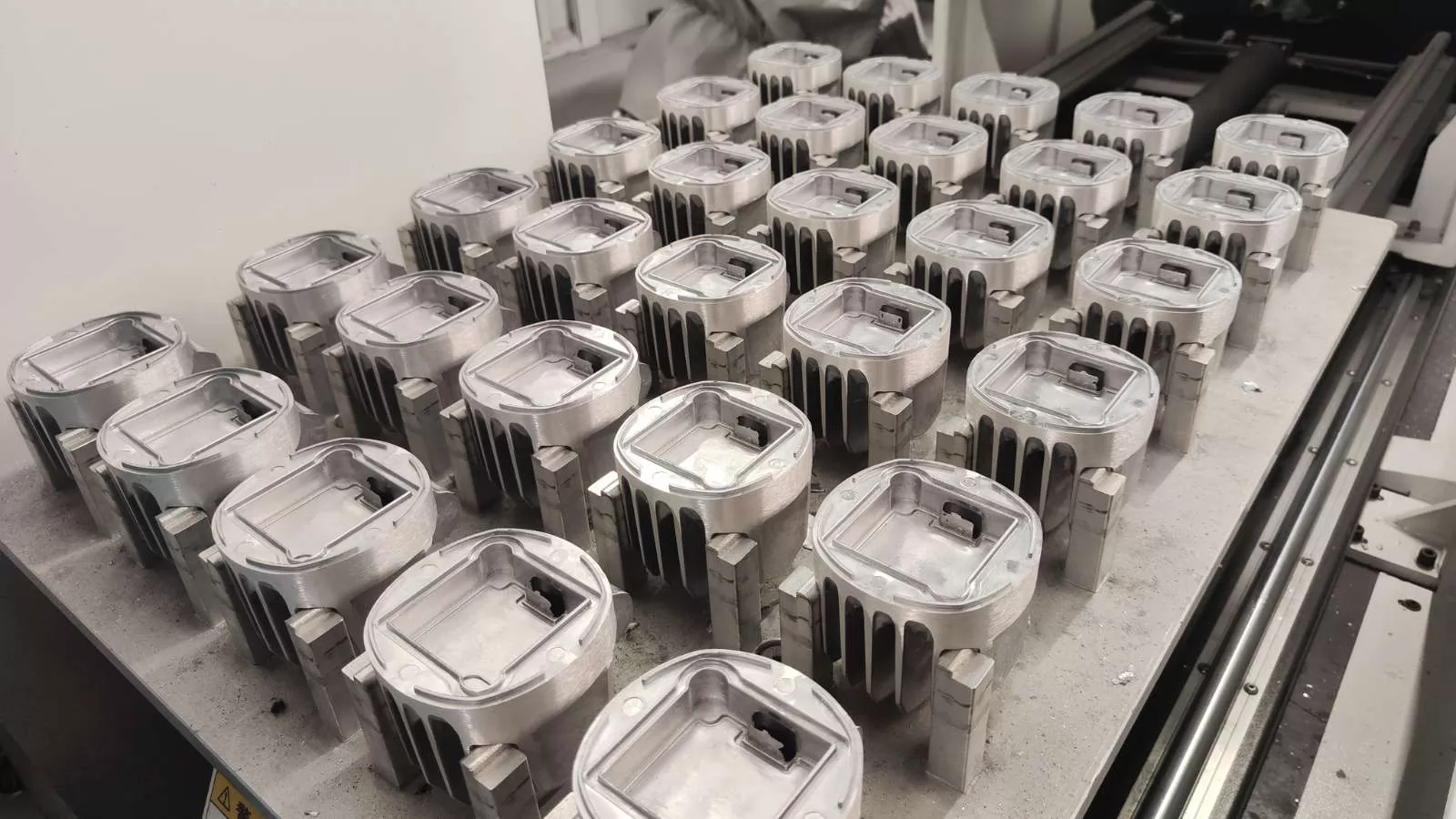
The most reliable way to understand the real-world difference between cast zinc and cast aluminum is to look at where each material dominates in practice. Industries don't make material choices based on data sheets alone — they make them based on years of engineering experience with what actually works under real operating conditions. In most cases, aluminum is preferred for larger structural and thermal applications, while zinc excels in smaller precision components where tight tolerances and surface finish matter most.
Automotive
The automotive sector is one of the largest consumers of both aluminum and zinc die cast components. Aluminum die casting dominates structural and powertrain components such as transmission housings, motor housings, battery cases, and suspension brackets. The material’s low density (about 2.7 g/cm³) allows manufacturers to significantly reduce vehicle weight, which directly improves fuel efficiency and EV driving range.
Zinc die casting is typically used for smaller mechanical and interior components that require tight dimensional tolerances and durability. Examples include door handles, lock mechanisms, seat adjusters, and dashboard hardware. Zinc’s higher density and excellent casting precision allow it to produce complex parts with minimal machining, making it suitable for high-volume automotive hardware.
Energy
In the energy sector, components must withstand harsh environmental conditions and long operating lifetimes. Aluminum is widely used for energy equipment housings and structural components because of its corrosion resistance and heat dissipation capability. Typical applications include inverter housings, solar mounting components, battery enclosures, and electrical control boxes.
Zinc die castings are more commonly used in smaller mechanical or electrical interface parts such as connector housings, brackets, and control hardware. These parts benefit from zinc’s dimensional stability and ability to maintain tight tolerances across large production volumes.
LED Lighting
LED lighting clearly highlights the material differences between aluminum and zinc die casting. Aluminum die casting is commonly used for LED housings and heat sinks because its thermal conductivity helps dissipate heat efficiently, which is critical for LED performance and lifespan.
Zinc die casting may be used for smaller structural or decorative lighting components such as mounting brackets or small housing elements. However, aluminum remains the dominant material when thermal management is the primary design requirement.
Marine
Marine applications require materials that can withstand continuous exposure to saltwater and humidity. Aluminum die casting is widely used in marine equipment because its natural oxide layer provides strong corrosion resistance. Typical components include pump housings, navigation equipment enclosures, and engine brackets.
Zinc die casting may appear in smaller marine hardware components such as latch mechanisms or interior fittings where precision manufacturing is important. However, for larger structural marine components, aluminum remains the more common material.
Telecommunications
The telecommunications industry relies heavily on aluminum die castings for equipment enclosures and infrastructure hardware. Aluminum is commonly used for telecom housings due to its structural strength and heat dissipation. Applications include base station housings, antenna brackets, signal amplifier enclosures, and outdoor network equipment frames.
Zinc die casting is typically used for smaller precision telecom components such as connector housings, cable hardware, and mounting interfaces where dimensional accuracy is important.
Medical
Medical device manufacturers often select aluminum die casting for equipment housings, diagnostic system frames, and portable medical instruments. Aluminum helps reduce equipment weight while maintaining structural strength, which improves usability and transportability.
Zinc die casting is used in smaller medical components where high dimensional accuracy is required. Examples include adjustment mechanisms, instrument housings, and precision parts used in laboratory equipment.
Across these industries, a clear pattern emerges. Aluminum die casting is generally chosen for larger, lightweight, and thermally demanding applications, while zinc die casting is commonly used for smaller precision parts that require tight tolerances and detailed surface finishes.
How to Choose Between Cast Zinc and Cast Aluminum?
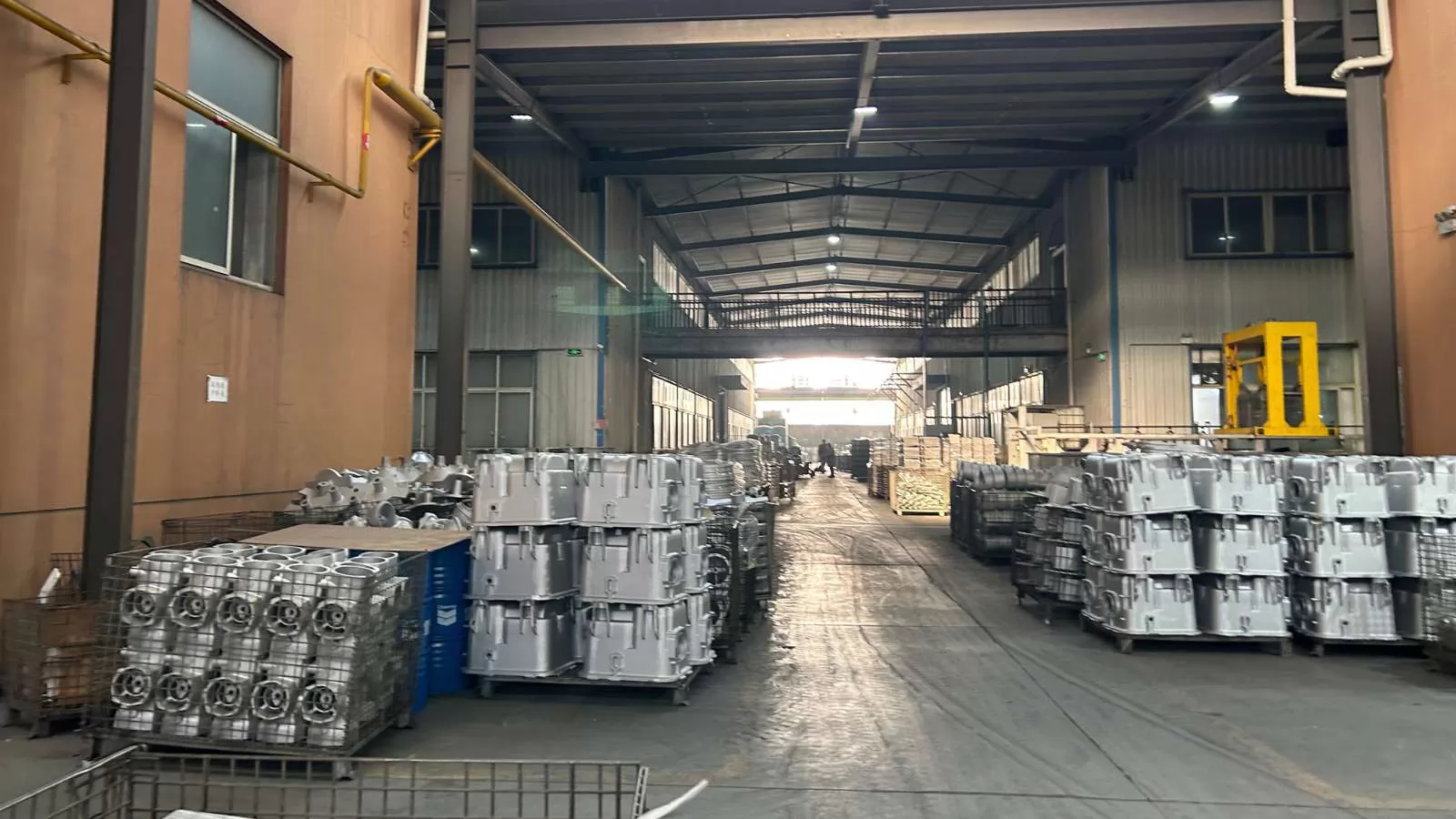
By this point, you have a detailed picture of what each material offers — its properties, its cost profile, its design requirements, and its industry track record. The final step is translating that knowledge into a practical decision framework for your specific project. The following questions are the ones that matter most, and working through them systematically will point you toward the right answer in the majority of cases.
The Decision Framework
1. How big is the part? If the finished component is larger than roughly 300mm in any dimension, or weighs more than 500g in its intended material, aluminum is almost certainly the right starting point. Zinc's economics and precision advantages are most pronounced in small to medium components. For large structural parts, zinc's density makes it impractical both mechanically and economically.
2. Does weight matter? If the application is weight-sensitive — portable electronics, automotive, aerospace, or any product where mass affects performance, handling, or shipping cost — aluminum's density advantage is hard to argue against. If weight is neutral or even desirable, as in counterweights, premium hardware, or structural anchors, zinc becomes more competitive.
3. What tolerances does the design require? If your part has features requiring tolerances tighter than ±0.05mm, or wall sections thinner than 1.0mm, zinc is the more capable process. For standard engineering tolerances on medium to large parts, aluminum is entirely adequate and likely more cost-effective.
4. What is the operating environment? Parts exposed to sustained elevated temperatures — above 120°C — should default to aluminum, which maintains its mechanical properties at higher temperatures better than most zinc alloys. Parts in high-humidity or chemically aggressive environments should factor in the coating system, as both metals require appropriate surface treatment for long-term corrosion protection.
5. What does the surface finish require? If the specification calls for anodizing, aluminum is the only option. If it calls for chrome or nickel electroplating, zinc will deliver a better result at lower cost. For powder coating and painting, either material works with the right pretreatment.
6. What is the annual production volume? At volumes below 10,000 units per year, the tooling cost amortization favors zinc's longer die life and lower upfront investment. At very high volumes — hundreds of thousands of units annually — aluminum's faster raw material cost reduction and lighter shipping weight can shift the economics in its favor, particularly for larger parts.
7. What does the assembly require? If the die cast part must be welded to other components, aluminum is the practical choice — zinc alloys are not weldable by standard methods. If the part is assembled mechanically or bonded adhesively, both materials are equally viable.
When Zinc Is the Right Answer
Choose zinc die casting when the part is small and geometrically complex, when tolerances are tight and secondary machining is undesirable, when the surface finish specification involves electroplating, when high impact strength in a compact form factor is required, or when long production runs demand the lowest possible tooling replacement frequency. Zinc is also the right choice when the part needs to convey premium quality through weight and finish — a consideration that matters more than engineers sometimes admit.
When Aluminum Is the Right Answer
Choose aluminum die casting when the part is large or structurally demanding, when weight reduction is a design objective, when the application involves sustained heat exposure or requires active thermal management, when the surface specification calls for anodizing, or when the part must be welded during assembly. Aluminum is also the better choice when the production program justifies the higher tooling investment through long-term per-unit cost reduction at scale — a profile that fits most high-volume industrial and automotive programs.
When to Consult a Specialist
Not every project fits cleanly into one category, and the cost of getting the material decision wrong — after tooling has been cut and production has started — is high. If your application sits in the grey zone between zinc and aluminum on multiple decision criteria, or if the part design is complex enough that manufacturability is a concern, engaging a die casting specialist for a formal DFM review before committing to a material is money well spent. The best custom die casting partners will tell you honestly which material serves your application better, even when it's not the one you assumed going in.
Frequently Asked Questions
These are the questions that come up most often when engineers, buyers, and product designers are working through the zinc vs aluminum decision for the first time — or revisiting it with a new project in hand.
Q1: Is zinc stronger than aluminum in die casting?
It depends on the type of strength being measured. Zinc alloys have higher impact strength and hardness than most aluminum die casting alloys, making them better suited for parts that must absorb shock or resist deformation under dynamic loads. Aluminum has a superior strength-to-weight ratio, making it the stronger choice for structural applications where mass is a constraint. Neither material is universally stronger — the answer depends on your specific load case and design requirements.
Q2: What is the main difference between die cast zinc vs aluminum in terms of weight?
Zinc is more than twice as dense as aluminum — approximately 6.6 g/cm³ versus 2.7 g/cm³. For a part of identical geometry, the zinc version will be roughly 2.4 times heavier than the aluminum version. This difference is significant for weight-sensitive applications but irrelevant — or even advantageous — in applications where mass contributes to function or perceived quality.
Q3: Is zinc die casting cheaper than aluminum die casting?
There is no single answer, because the total cost of a die cast part depends on size, complexity, volume, and finishing requirements. Zinc tooling generally costs less and lasts longer than aluminum tooling, and zinc's faster cycle times reduce per-unit machine costs at high volumes for small parts. However, zinc's higher raw material density means more metal consumed per part, and its higher price per kilogram can offset cycle time savings. For large parts at high volume, aluminum often delivers lower total cost. For small, complex, precision parts, zinc frequently wins on economics. The only reliable way to compare is with a full cost model for your specific part and volume.
Q4: What is die cast aluminum commonly used for?
Die cast aluminum is used across a wide range of industries wherever light weight, structural strength, and thermal performance are priorities. Common applications include automotive engine and transmission components, EV battery housings, electronic enclosures, heat sinks, power tool bodies, lighting fixtures, HVAC components, and industrial machinery housings. It is the most widely used die casting material in the world by volume.
Q5: Can I get quality custom aluminum die casting from China?
Yes — China has many highly capable aluminum die casting suppliers who produce parts to international quality standards for global OEMs. The key is supplier selection and qualification. Look for ISO 9001 or IATF 16949 certification, in-house tooling capability, CMM inspection equipment, and a track record with customers in your industry. Avoid selecting suppliers on price alone, and invest in first-article inspection and process capability review before committing to volume production.
Q6: What is the best aluminum alloy for die casting?
A380 is the most widely used aluminum die casting alloy and offers the best all-around combination of castability, mechanical strength, and corrosion resistance for general-purpose applications. A383 is preferred when tighter tolerances or better resistance to hot cracking are required. For applications requiring elevated corrosion resistance, A360 is a common specification. The right alloy depends on your specific mechanical, environmental, and processing requirements — a qualified die casting supplier should be able to recommend the appropriate alloy for your application.
Q7: How do I find the best aluminum die casting supplier for my project?
Start by defining your requirements clearly: part size and weight, annual volume, tolerance requirements, surface finish specification, and target unit cost. Use these criteria to filter suppliers by capability before engaging on price. Request DFM feedback as part of the quoting process — a supplier who reviews your design for manufacturability is demonstrating engineering competence that will save you money downstream. Ask for references from existing customers with similar applications, review quality certifications, and if the program justifies it, conduct an on-site audit before awarding the tooling contract.
Q8: Can zinc die cast parts be welded?
Standard zinc alloys are not weldable by conventional welding methods due to zinc's low melting point and the formation of brittle intermetallic phases during fusion welding. Zinc components are typically joined through mechanical fastening, press fitting, adhesive bonding, or soldering. If your assembly process requires welding, aluminum is the appropriate die casting material — aluminum die castings can be welded using MIG, TIG, or friction stir welding with the correct alloy selection and joint design.
Conclusion: Making the Right Call on Cast Zinc vs Cast Aluminum
The cast zinc vs cast aluminum decision is not a matter of one material being better than the other — it's a matter of matching the right material to the right application. Both have earned their place in modern manufacturing through decades of proven performance across demanding industries. The engineers and buyers who get this decision right consistently are the ones who resist the temptation to default to habit or price, and instead work through the actual requirements of the part: its size, its load profile, its operating environment, its finish specification, and its production economics.
Aluminum wins when light weight, thermal performance, and structural scale are the priority. Zinc wins when precision, surface quality, impact resistance in a compact form, and long-run tooling economics are what matter most. In many product programs, both materials appear — each doing exactly what the other cannot.
If you're at the beginning of a new project and working through this decision, the most valuable thing you can do is engage a qualified die casting partner early — before the design is locked and certainly before tooling is cut. The best custom die casting suppliers bring material expertise, DFM insight, and process knowledge that can improve your design, reduce your cost, and accelerate your time to market in ways that no specification sheet can replicate.
The right material, the right design, the right supplier — get all three aligned, and die casting will deliver exactly what it promises: complex, precise, durable parts at a cost that no other process can match at scale.
0
Comments
Leave a Comment
Your email address will not be published. Required fields are marked *
Name can't be empty
Email error!
Message can't be empty
😍
😜
😳
😌
😄
😘
😝
😒
😃
😚
😚
😛
😟
😧
😀
😉
😓
😱
😤
😣
😂
😥
😩
😠
😢
😭
😰
😨
😡
😆
😪
😅
😐
😇
😋
😴
👿
😕
😏
😷
😵
😟
😮
😯
😑
👧
👴
😧
😬
😾
👶
👱
👵
👸
🙀
👺
👦
👩
👨
😽
😿
🙈
💩
💥
💤
😼
😹
🙉
🔥
✨
💦
👎
✌
👆
👈
💪
💹
👍
👊
💴
💶
💷
💸
👉
💵
🙏
🌎
🏧
👏
💳
👇
💑
🙆
🙅
💁
👫
👭
🙎
🙇
👑
👔
Submit Comment
Most Popular
-
 Jan 30, 2026Aluminum Die Casting Cost Breakdown: From Material to Machining
 -
 Oct 22, 2025Top 10 Aluminium Die Casting Manufacturers and Suppliers in the World
 -
 Nov 26, 2025Top 10 Aluminium Low Pressure Die Casting Manufacturers in the World 2026
 -
 Oct 29, 2025Top 10 Aluminium Casting Foundries and Companies in China


Laster Blogs
-
 Mar 31, 2026Cost of Investment Casting: What Buyers and Engineers Need to Know
 -
Mar 28, 2026Top 10 Aluminium Casting Foundries and Companies in China
-
 Mar 28, 2026Top 10 Precision Aluminium Investment Casting Factories and Manufacturers in China
 -
 Mar 27, 2026Die Casting Tolerances: Standards, Types, and What to Expect from Aluminum


Send RFQ Today
Name can't be empty
Email error!
Send Your Message
Note: If you are looking for a job, please send an email to it2@innovaw.com