Marine castings are critical structural components that ensure stability, corrosion resistance, and long-term reliability in demanding offshore and shipboard environments. With advanced aluminum casting technologies, manufacturers can produce custom stabilizer housings, LED work light housings, and marine connector bodies with high dimensional precision, strong mechanical integrity, and excellent resistance to saltwater exposure—essential for maintaining vessel performance and operational safety.
Whether used in stabilizer systems, navigation and deck lighting, or power and signal transmission units, aluminum marine castings offer robust protection against vibration, moisture, salt spray, and temperature fluctuations. Their lightweight yet highly durable characteristics make them ideal for ships, offshore platforms, and marine equipment where components must operate continuously under harsh ocean conditions.
Supported by optimized mold engineering, advanced simulation, and strict quality control, modern marine castings achieve consistent performance and reliable sealing while maintaining compatibility for mass-production assembly. This allows marine manufacturers in China and worldwide to build durable, energy-efficient, and corrosion-resistant components tailored to diverse maritime applications.
Contact Us Now
Custom Marine Aluminum Castings Manufacturer in China
As marine equipment continues to advance toward higher reliability, lower maintenance, and longer operational life, aluminum castings have become essential for achieving durability and corrosion resistance in harsh ocean environments. In China’s marine manufacturing industry, precision aluminum casting is widely used to produce stabilizer housings, ship LED work light housings, and marine connector casings with exceptional strength and seawater resistance.
High-performance marine castings are critical for ensuring structural integrity, protecting internal components, and maintaining stability under continuous vibration, wave impact, and saltwater exposure. Whether applied to vessel stabilization systems, shipboard lighting units, offshore equipment, or marine electrical networks, these castings support long-term performance by resisting corrosion, managing heat, and maintaining secure mechanical connections.
Looking for custom marine-grade aluminum castings?
As a professional China manufacturer, Innovaw specializes in custom aluminum die casting, gravity casting, and CNC machining to produce robust marine housings with excellent sealing, high corrosion resistance, and precise dimensional control. With strong engineering capability and strict quality standards, we ensure each component meets the demanding mechanical, environmental, and safety requirements of global marine applications.
From heavy-duty stabilizer housings to ship LED light casings and precision marine connectors, our team supports your project from early design through reliable mass production.
Request a free quote today and work with a trusted custom marine casting manufacturer in China.
Innovaw Manufacturing Services for Marine Aluminum Castings
As a specialized China-based manufacturer, Innovaw provides complete marine casting and machining services designed to support custom components used in demanding ocean environments. From rapid prototyping to full-scale aluminum casting production, our integrated capabilities ensure high efficiency, stable quality, and reliable engineering support for every stage of your marine project.
Solving Marine Casting Challenges with Advanced Aluminum Technologies
Marine aluminum castings face demanding challenges, including saltwater corrosion, pressure fluctuations, vibration, thermal cycling, and the need for watertight sealing. These conditions can severely affect performance if castings contain porosity, shrinkage, or dimensional instability. For marine stabilizer housings, ship LED work light casings, and connector bodies, precision and material integrity are essential.
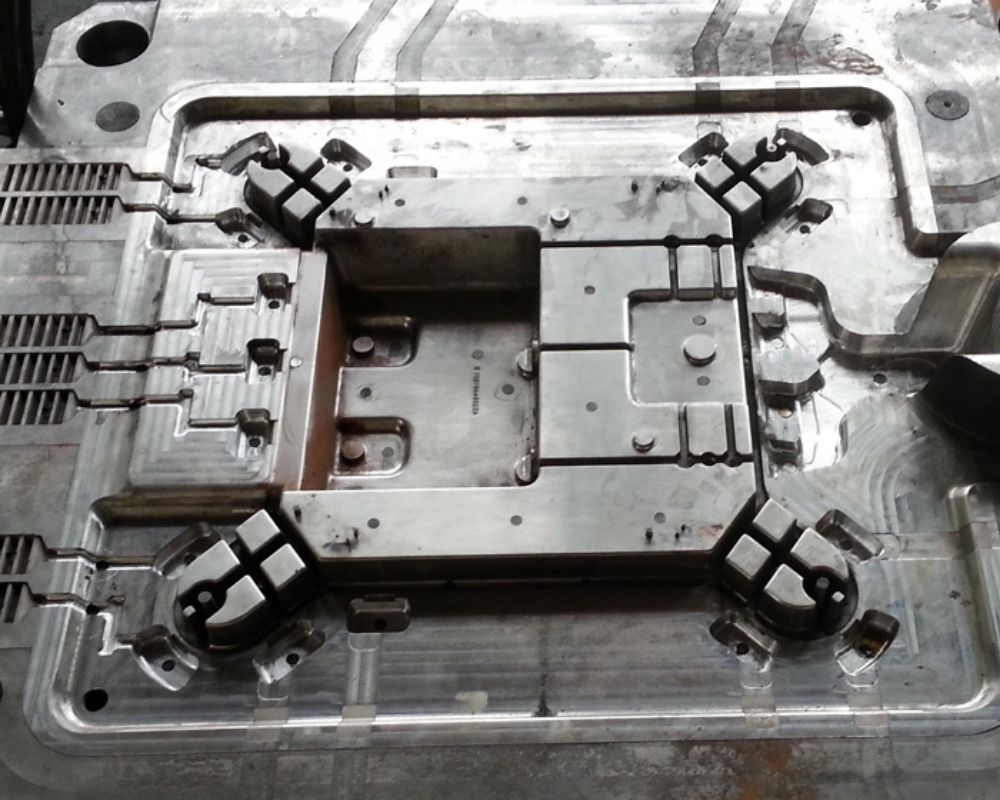
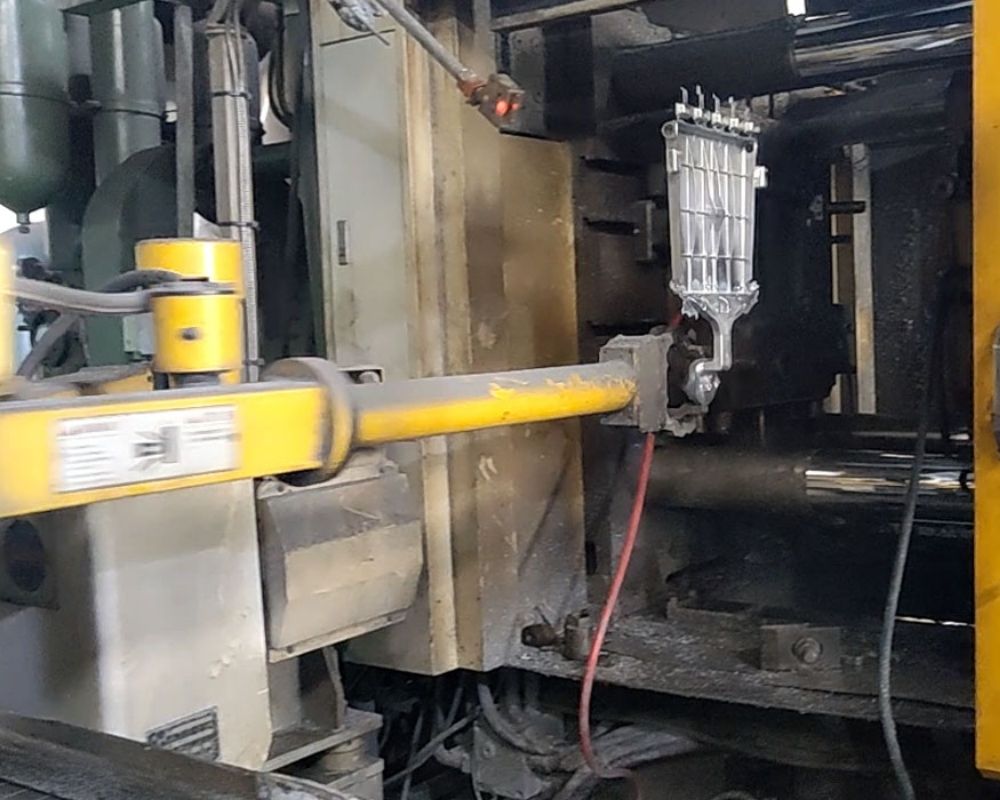
Through advanced aluminum casting technologies, optimized mold-flow simulation, and strict process control, Innovaw effectively reduces internal defects and enhances material density to ensure durability in marine environments. Whether for high-strength structural components or corrosion-resistant housings, our castings deliver stable performance and meet the rigorous standards required for long-term use at sea.
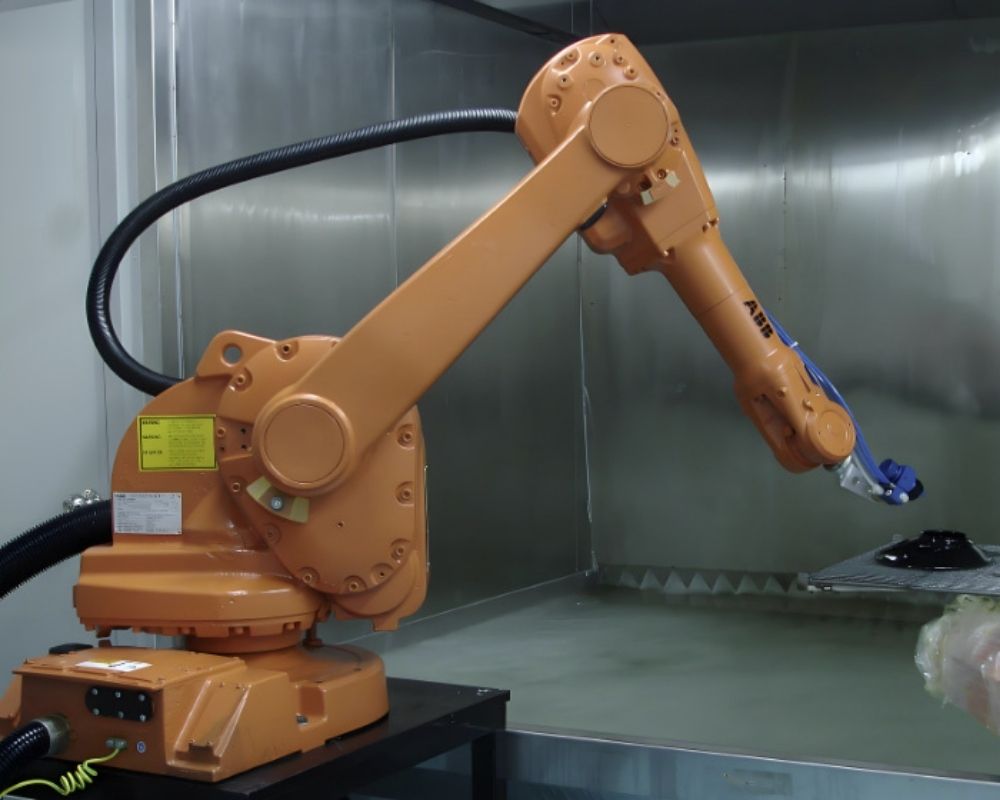
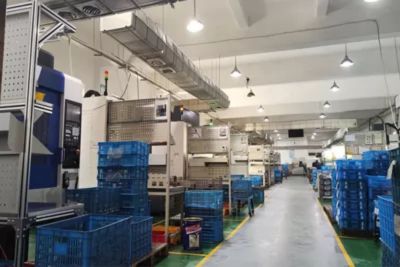
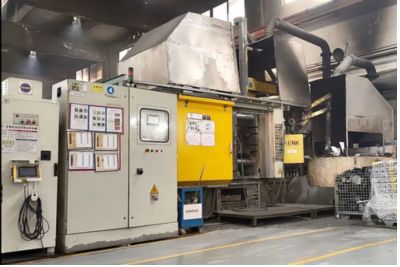
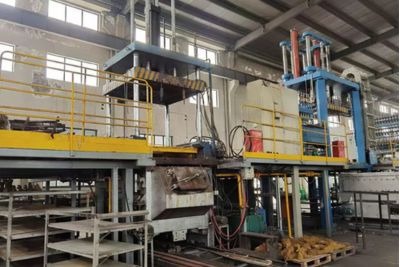
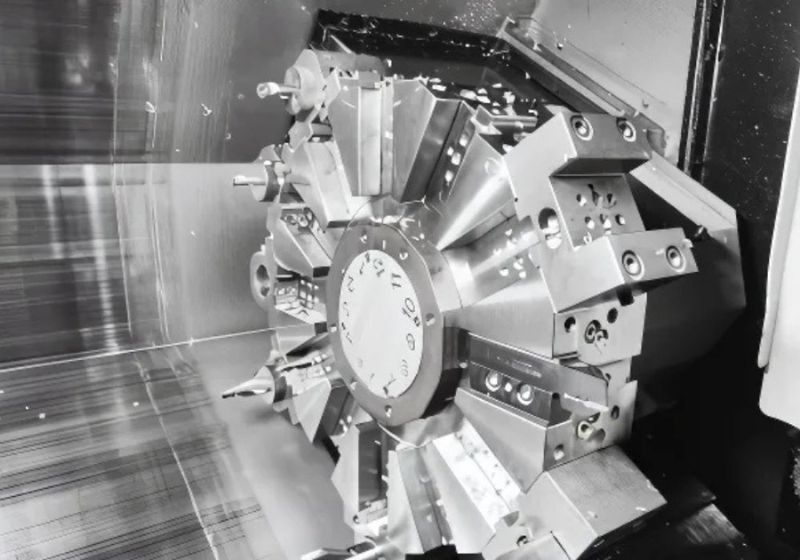
Advanced Equipment for Marine Aluminum Casting Production
Quality Control and Sustainability for Marine Aluminum Castings
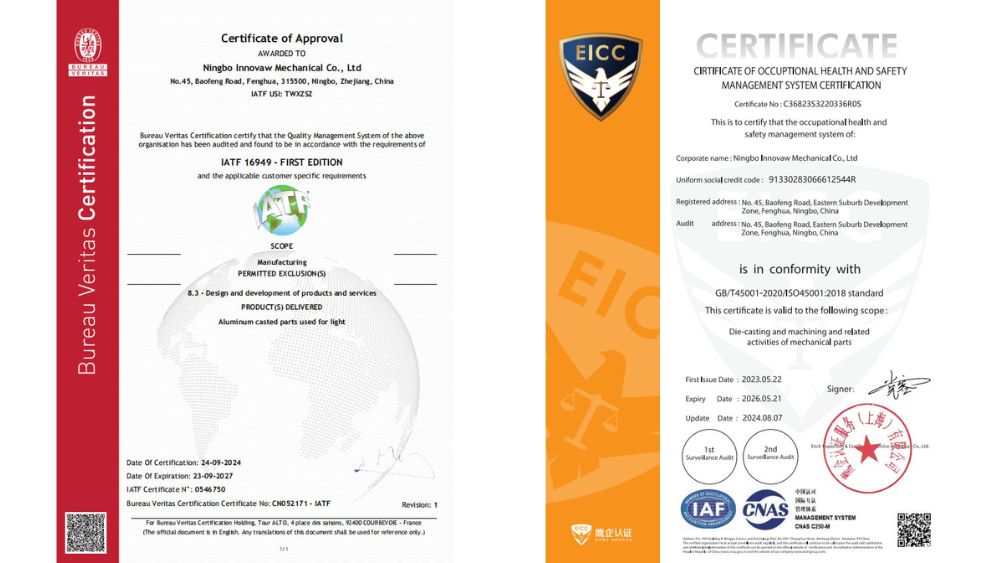
IATF 16949 Certified Manufacturer
Innovaw’s quality system ensures stable and reliable marine castings with consistent mechanical performance. Through real-time monitoring and precision inspection, we eliminate casting defects and maintain high standards required for marine structural and electrical components.
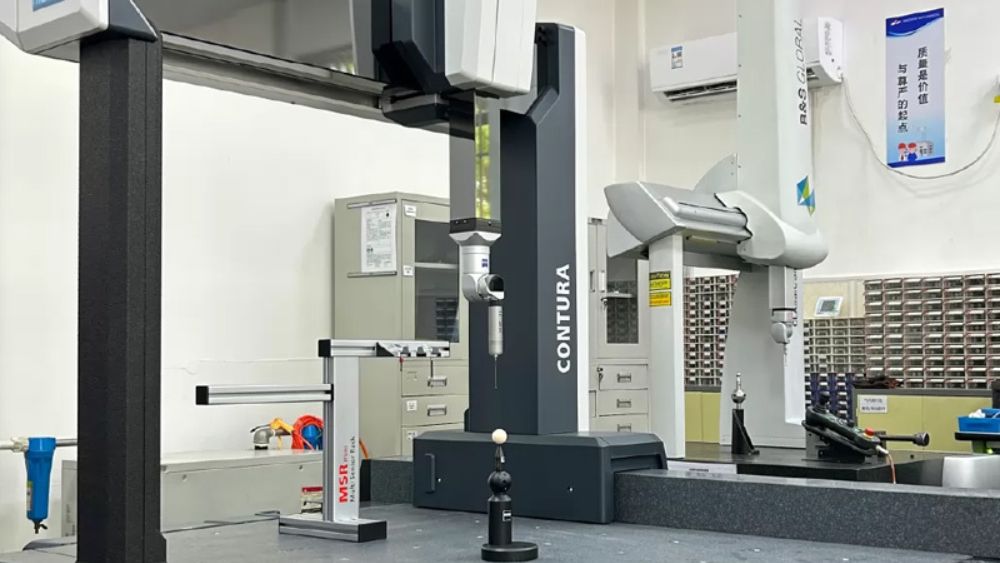
In-House Quality Inspection Lab
Our inspection lab includes CMM and VMS measurement systems, spectrometer testing, tensile and hardness evaluation, X-ray non-destructive testing for internal defects, and water or helium leakage testing to ensure watertight and pressure-resistant marine castings.
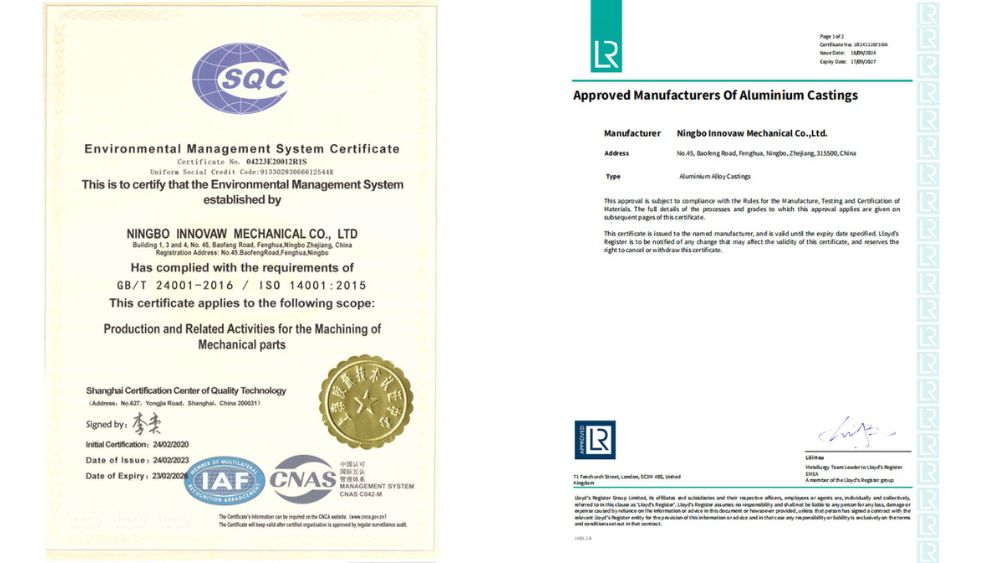
ISO 14001, ISO 45001, SA8000, ISO/IEC 27001
Innovaw incorporates environmental responsibility, safety, social accountability, and data protection into its marine casting operations, ensuring secure and sustainable production for global maritime partners.
Common Marine Aluminum Casting Applications
Innovaw specializes in precision aluminum castings for marine stabilization, lighting, and electrical systems. Our castings are engineered to perform reliably in environments exposed to saltwater, vibration, extreme temperatures, and long-term mechanical loads commonly found in marine applications.
Typical applications include marine stabilizer housings for vessel balance systems, ship LED work light housings for deck and underwater illumination, and marine connector casings used in navigation, communication, and power distribution. Each part is designed to provide excellent corrosion resistance, structural durability, and watertight performance.
With advanced casting processes, CNC machining, protective surface treatments, and custom engineering, we deliver high-quality marine components that meet strict industry requirements for reliability and longevity at sea.
Why Choose Innovaw for Your Marine Aluminum Casting Projects
Innovaw brings extensive experience in producing custom marine aluminum castings designed for corrosion resistance, mechanical strength, and long-term performance in ocean environments. Our engineering team works closely with clients from concept to production, optimizing each design for manufacturability and durability.
With advanced die casting, gravity casting, CNC machining, and surface finishing capabilities, Innovaw manufactures complex components such as stabilizer housings, LED light casings, and marine connectors with high dimensional accuracy and excellent sealing. Combined with advanced simulation tools and strict certification systems, we ensure consistent, high-quality production.
As an ISO 14001, ISO 45001, SA8000, and ISO/IEC 27001 certified manufacturer, we are committed to safety, sustainability, and quality, providing dependable marine casting solutions to partners worldwide.
Common Materials for Marine Aluminum Cast Parts
Innovaw offers corrosion-resistant aluminum alloys specifically suited for marine environments, including A356, A380, ADC12, and other high-performance materials. These alloys provide excellent strength, thermal stability, and resistance to saltwater corrosion, making them ideal for stabilizers, lighting housings, and marine electrical components.
To meet various functional and aesthetic requirements, we provide machining, anodizing, powder coating, e-coating, and additional protective finishes that enhance durability and long-term resistance to seawater exposure.
Other Manufacturing Services for Custom Marine Parts
In addition to aluminum casting, Innovaw offers CNC machining, investment casting, sand casting, and gravity casting to support a wide range of custom marine components. These capabilities ensure flexibility across different part sizes, production volumes, and performance requirements.
CNC Machining for Marine Components
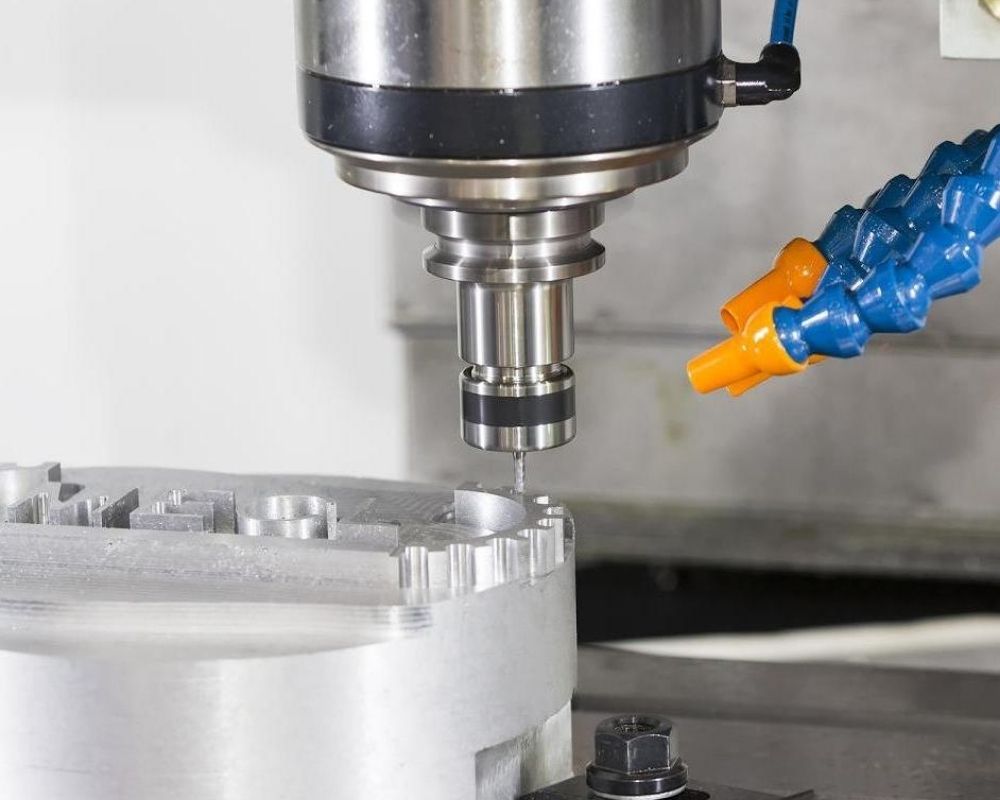
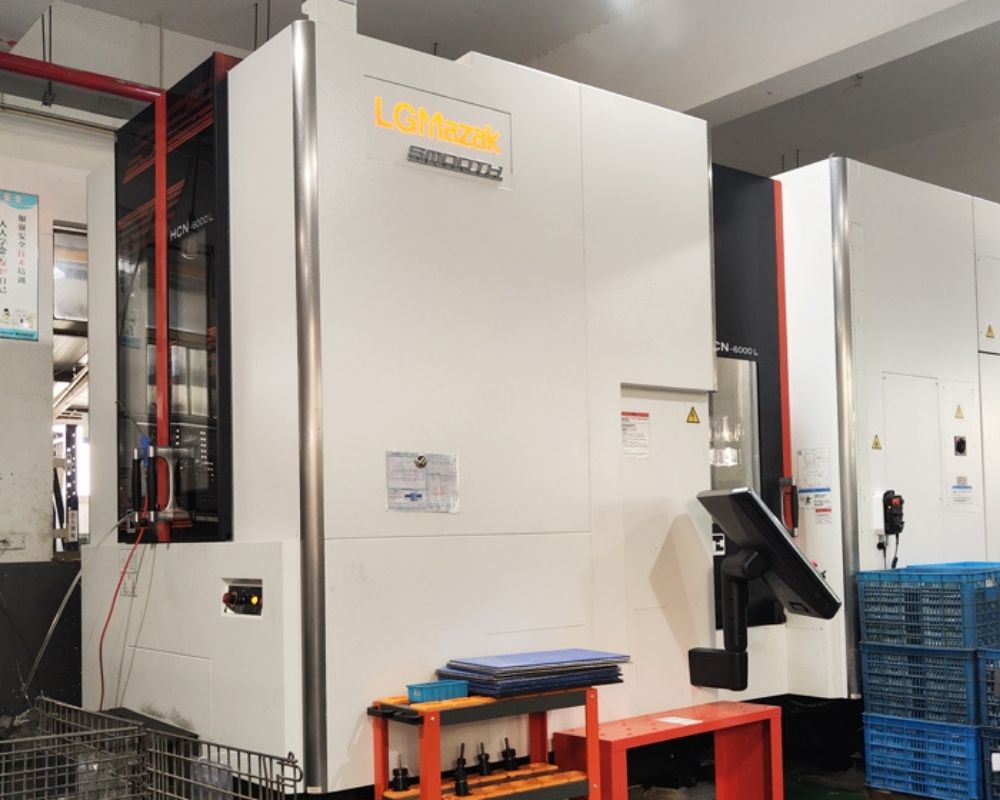
Innovaw offers precise CNC machining for marine stabilizer housings, connector interfaces, LED light bodies, and complex structural parts. Our advanced equipment ensures excellent tolerance control, surface quality, and consistency for both prototypes and mass production.
Investment Casting for Marine Parts
Investment casting is ideal for marine components requiring detailed geometries, smooth surfaces, and strong mechanical performance. We produce brackets, connectors, stabilizer elements, and intricate housings with reliable precision and durability.
Sand Casting for Marine Components
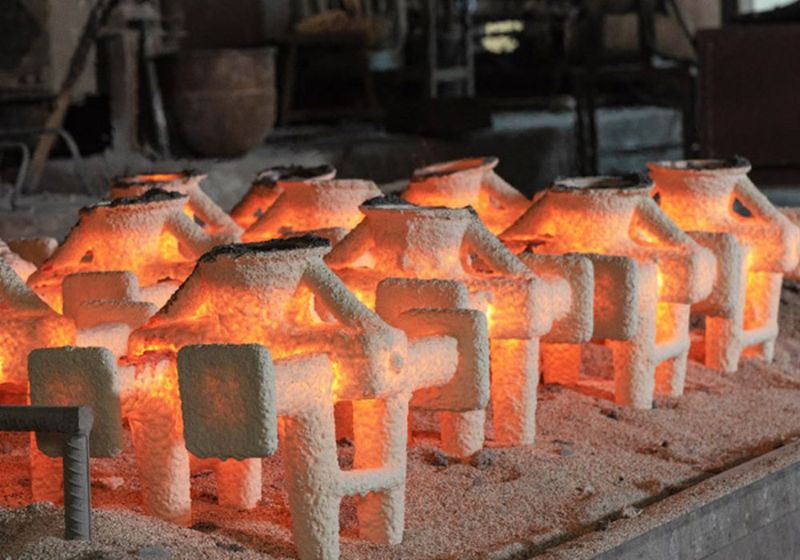
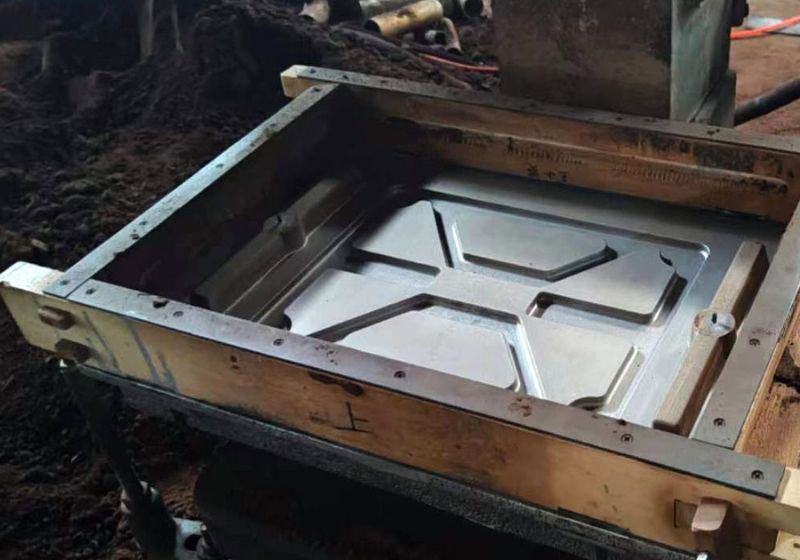
Sand casting is well-suited for large or thick-wall marine components such as housings, bases, and mounts. Innovaw provides full support from sand mold production to machining and surface protection to ensure durability in seawater conditions.
Gravity Casting for Marine Components
Gravity casting provides excellent mechanical strength and corrosion resistance, making it suitable for A356 stabilizer parts, lighting housings, and marine-grade structural elements. Innovaw delivers complete services including mold design, casting, machining, and finishing.
Choose the Best Marine Aluminum Casting Service
Innovaw’s marine aluminum castings and CNC-machined components are exported to the United States, Canada, Germany, the United Kingdom, Australia, France, South Africa, and many other regions. As an ISO9001:2015 certified China manufacturer, we ensure each marine component meets stringent global requirements for strength, safety, and long-term corrosion resistance.
We specialize in providing custom aluminum castings tailored for stabilizer systems, ship lighting, marine connectors, and other ocean-related applications. Our engineering team and advanced production capabilities deliver precise, durable, and cost-effective solutions for marine equipment manufacturers worldwide.
Contact us today to learn how our casting expertise, engineering support, and production technology can enhance the performance of your marine components.
Get in Touch with Us
Name can't be empty
Email error!
Message can't be empty
Captcha Error!
Send Your Message
Explore Our FAQs for Quick Solutions
Empowering you to fully understand everything about us-start exploring now
What Types of Components Are Commonly Produced Using Aluminum Casting?
Aluminum casting is widely used across industries because it supports lightweight structures, complex geometries, and strong mechanical performance. As a China manufacturer specializing in custom aluminum castings, we produce housings, structural brackets, heat sinks, pump and valve bodies, motor components, and instrument enclosures used in agricultural machinery, automotive systems, bicycles, marine equipment, LED work lights, medical devices, gas meters, water heaters, and many other fields. The versatility of the casting process allows us to meet both high-volume industrial demands and specialized custom product requirements.
How Do I Choose Between High-Pressure Die Casting, Low-Pressure Die Casting, Gravity Casting, and Investment Casting?
Each casting process is suitable for different structures and performance needs, and our engineering team helps customers select the best option during the early design stage. High-pressure die casting is ideal for thin-wall, complex components produced in large quantities, while low-pressure die casting provides better metal flow control and improved strength for medium-wall parts. Gravity casting offers stable performance with thicker walls and higher load demands, and investment casting enables high-precision details for small or intricate components. As a custom casting manufacturer in China, we evaluate cost, strength, and functional requirements to ensure the most efficient solution.
Can Aluminum Castings Be Heat Treated or Welded?
Yes, many aluminum castings produced through gravity casting, low-pressure casting, sand casting, and investment casting can undergo T5 or T6 heat treatment to achieve higher strength and improved mechanical properties. These processes also typically produce structures that are weldable and suitable for secondary assembly. High-pressure die castings may have more limitations due to porosity, but our vacuum-assisted HPDC solutions help reduce internal defects and increase weldability. We guide every customer to the most suitable combination of alloy, heat treatment, and casting process for their custom part.
What Mechanical Properties Can Be Achieved with Aluminum Castings?
Mechanical properties depend on alloy type, casting method, and heat treatment. As an experienced aluminum casting manufacturer, we commonly achieve tensile strengths between 180–320 MPa, yield strengths of 120–260 MPa, elongation levels from 2–10%, and hardness values around 60–100 HB. Processes such as low-pressure casting and gravity casting often produce denser, more reliable structures suitable for high-load, high-vibration, or sealing-critical applications used in automotive, energy, and industrial equipment.
What Aluminum Alloys Are Commonly Used?
We work with a full selection of aluminum alloys, including A356, AlSi7Mg, AlSi10Mg, AlSi9Cu3, AlSi12, and other industry-standard formulations. These alloys each offer distinct advantages in terms of strength, fluidity, corrosion resistance, and machinability. For custom aluminum castings, our engineers analyze customer specifications, working environments, temperature requirements, and expected lifespan to recommend the most suitable material for the product.
What Surface Treatments Are Available?
To meet the diverse needs of global customers, we provide a wide range of finishing options that enhance durability, appearance, and corrosion resistance. Common treatments include sand or shot blasting, anodizing, powder coating, painting, and chromate conversion coating. For sealing surfaces or components that require high precision, CNC machining can achieve extremely fine finishes suitable for mechanical assembly or functional contact areas. These finishing capabilities help ensure our China manufacturing services meet the quality standards of industries such as energy, automotive, LED lighting, and marine equipment.
What Dimensional Accuracy Can Be Achieved?
Dimensional accuracy varies depending on the manufacturing method, and our custom casting and CNC machining capabilities allow us to achieve extremely tight tolerances where needed. High-pressure die casting provides very consistent as-cast accuracy, while gravity casting and low-pressure casting can achieve even tighter precision after machining. For critical components, CNC finishing enables tolerances as fine as ±0.01 mm, supported by CMM inspection to ensure that every product meets the customer’s specifications.
How Do You Control Porosity in Aluminum Castings?
As a professional casting manufacturer, we use multiple techniques to minimize porosity, including controlled melt treatment, degassing, ceramic filtration, optimized mold flow simulation, and vacuum-assisted casting technology. For products requiring extremely high density, such as sealing housings, energy components, gas meter parts, or automotive structural pieces, we often recommend gravity casting or low-pressure casting due to their stable solidification characteristics. X-ray inspection or CT analysis can also be provided for projects that require rigorous quality assurance.
How Do You Ensure Leak-Tight Performance for Components That Must Maintain Pressure or Fluid Sealing?
Leak-tight performance is achieved through a combination of dense casting structures, optimized mold design, and precision machining of sealing surfaces. Our low-pressure and gravity casting processes naturally reduce air entrapment, creating castings suitable for pumps, hydraulic systems, cooling plates, and gas meter bodies. When necessary, we apply advanced machining and surface treatments to ensure reliable sealing. This engineering approach allows us to deliver custom castings that meet demanding leak-proof requirements across multiple industries.
What Leak Testing Methods Are Used Before Delivery?
Leak testing depends on the application, but typically includes air-under-water tests, pressure decay measurements, water pressure simulation, or high-sensitivity helium leak detection. Each test method ensures that the castings perform reliably under real-world conditions, whether they are used in automotive systems, water heating equipment, energy devices, or precision instruments. All tests are performed according to customer specifications and international standards.